
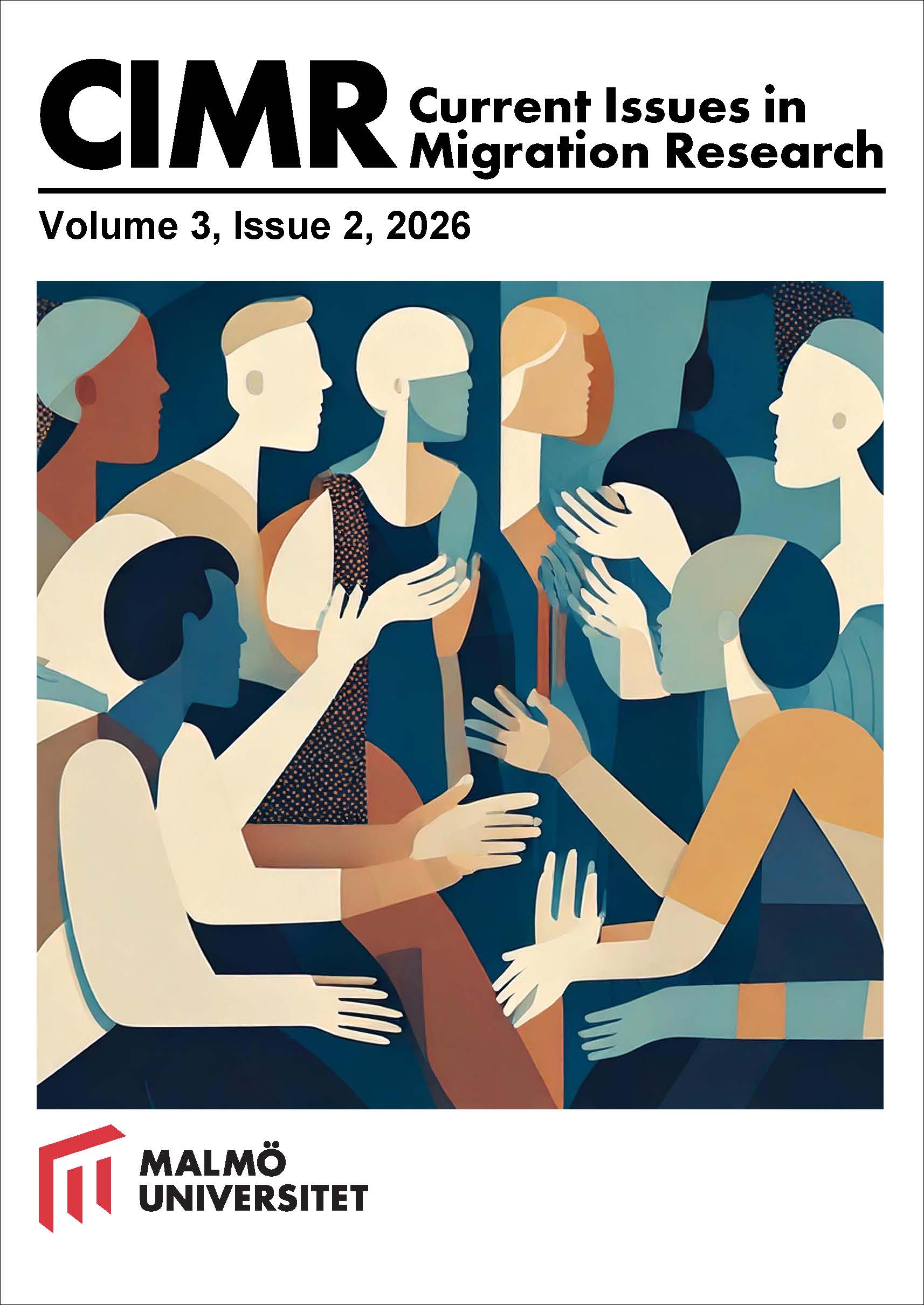
Conceptualisations and Dynamics of Integration in the Context of Migration and Diversity
Vol. 3 No. 2 (2026)
Immigrant integration is high on most governments’ agenda. Following declarations in the early years of the new millennium that multiculturalism had failed, integration became a highly politicized field, resulting in policy debates that increasingly framed integration as an individual migrant responsibility.
At the same time, critical scholarship has challenged both integration policies and the academic use of integration as an analytical concept. Critics argue that policy-driven approaches risk producing flawed research, reinforcing racialized, gendered and postcolonial hierarchies, and framing migrants through a deficit lens. Others have criticized integration for its conceptual vagueness and proposed alternatives such as inclusion or incorporation to better capture power relations, lived experiences and translocal connections.
More recently, new perspectives have highlighted the growing complexity of contemporary societies. Taking these complexities as the foundation for this issue's special section, and acknowledging the need for timely, empirically grounded insights into these evolving dynamics—as well as critical engagements with them—the contributions in this issue of Current Issues in Migration Research reconsider conceptualisations and examine the dynamics of integration within the broader context of migration and diversity.

Special Issue: Measuring Diversity and Inclusion in Malmö
Vol. 3 No. 1 (2026)
Special Issue: Measuring Diversity and Inclusion in Malmö
Understanding immigration-driven demographic complexity in Sweden—and Malmö in particular—critically depends on data. This special issue “Measuring Diversity and Inclusion in Malmö” is based on the Malmö Institute for Migration Studies’ (MIM) Diversity and Inclusion Survey. Through its systematic collection of self‑identification data, complemented by register data, the survey makes a unique methodological contribution to analysing patterns of inclusion and exclusion in Malmö multidimensionally. The contributions in this special issue use survey data to shed light on families, access to health care, voting behaviour, the use of languages and belonging as well as integration outcomes.
All contributions are accompanied by a visualisation that captures each article's main message. These visualisations are a result of a collaboration between researchers at MIM and students in the Visual Communication program at Malmö University. The visualisations can be accessed here or through the articles.

Migration, War and Violent Conflict
Vol. 2 No. 2 (2025)
The world is witnessing a rise in wars, invasions, violent conflict, and political instability, driving forced migration across multiple regions. The number of refugees and internally displaced persons (IDPs) globally has reached record levels. According to the UNHCR, over 120 million people are currently displaced worldwide, with protracted crises unfolding in Armenia, the DRC, Ethiopia, Gaza, Myanmar, Somalia, the Sahel, Sudan, Ukraine and Yemen, among many others.
Violent conflicts profoundly reshape people's (im)mobilities, revealing the intersecting trajectories of internal and cross-border movements. These forced (im)mobilities redefine social relations, influencing family structures, political mobilizations, economic livelihoods, and cultural expressions – locally, translocally, and across borders. With displacement increasingly becoming protracted, the organization of humanitarian relief and international refugee protection faces mounting challenges. Simultaneously, migrants and refugees are increasingly framed as national security threats, serving as a political justification for human rights infringements and the militarization of borders.
The contributions in this special section on migration, war and violent conflict address this topic from a variety of empirical, methodological, and theoretical angles.

Borders and Bordering Processes
Vol. 2 No. 1 (2025)
Borders and Bordering Processes
Borders are an integral part of everyday life. They can be physical manifestations, marking the boundaries between countries or other political entities, or they can be symbolic, representing social, economic, political, racial or other divisions, both real and imagined. Borders allow some to pass while excluding others, thus offering both protection and risk. While natural features like mountains, rivers, or seas can form borders, borders are primarily sociopolitical constructs. These constructs involve processes that extend beyond geographical lines and manifest in daily social interactions, impacting (im)mobilities, identities and relations.
The contributions in this special section on borders and bordering processes address this topic theoretically, empirically, methodologically or creatively in a variety of ways.
